
A Google Business Profile can be visible and still obstruct an enquiry. An inactive number, outdated hours, a website link that opens a generic page or an inaccurate map pin can interrupt the journey precisely when someone is ready to call, visit or ask for information.
This is not a second guide to local rankings. For territorial relevance and the relationship between a website and Google presence, read our method for local SEO in Piacenza. The purpose here is narrower: to verify that every piece of information and every action on the Profile leads to the step it promises.
Start with the customer journey, not the edit form
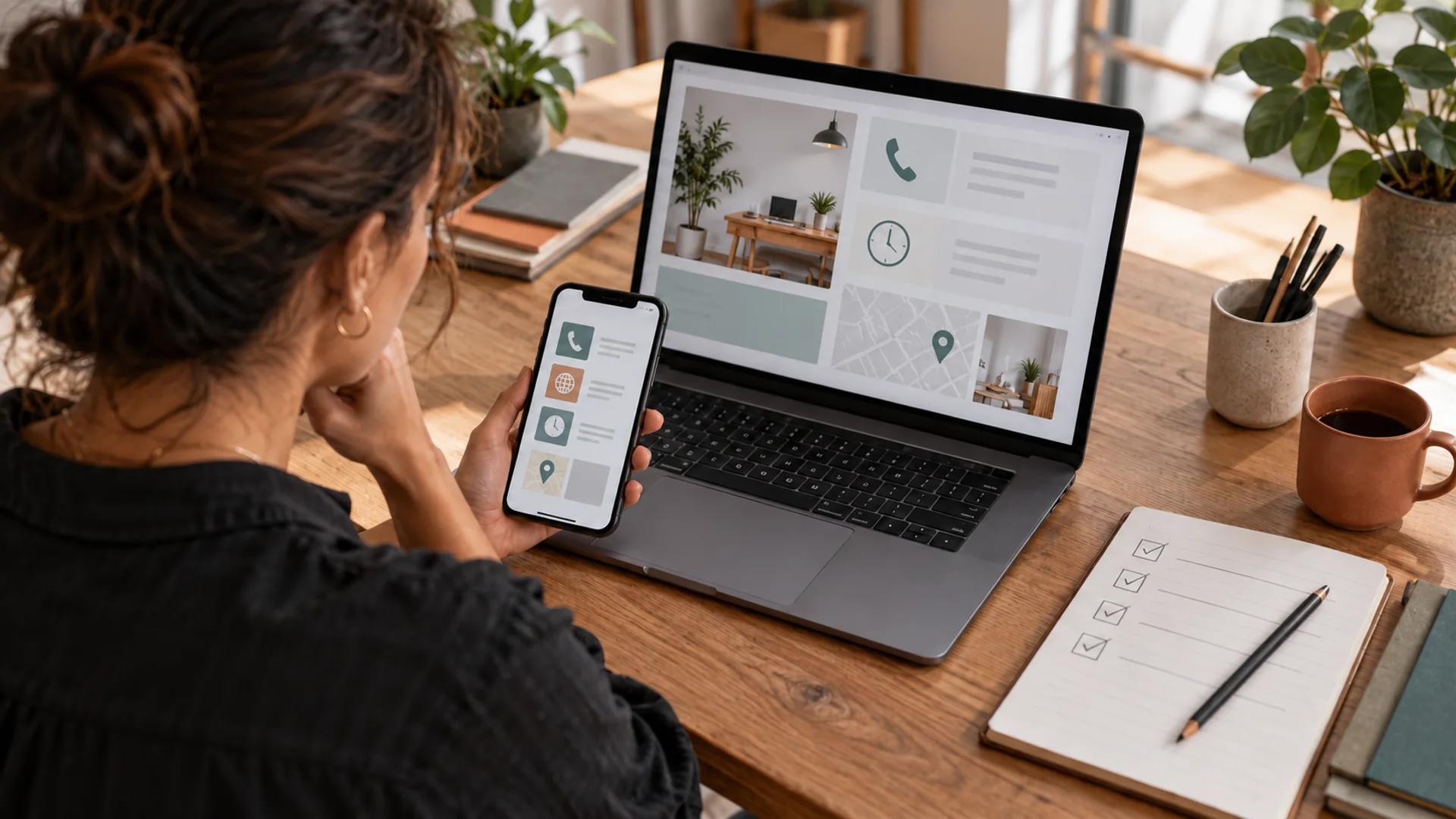
Before changing the Profile, open it as an outsider would, preferably on a smartphone and without relying on the management view. Search for the business name, observe what appears in Search and Maps, and try the main actions: call, website, directions and booking where relevant. Record where each action leads and what happens next.
This test separates three different problems. The Profile may contain incorrect information; a link may point to the wrong destination; or the destination may be correct but difficult to use. Fixing only the first layer leaves the rest of the friction untouched. Follow the full journey through to a confirmed call, submission or arrival rather than stopping at the fact that a button exists.
Use the name and categories to describe, not persuade
The Profile name should match the real name used at the location and on the business website. Adding slogans, services or place names simply to occupy more space creates inconsistency and does not help someone recognise the company. Categories should explain what the business is, using genuinely representative options instead of collecting every service it offers.
Google’s official guidelines for representing a business require accurate names, addresses or service areas and recommend using as few relevant categories as possible. The practical check is straightforward: do the name, primary category and description represent the same business a customer will encounter on the website, by phone or at the location?
Test the phone and website as real contact tools
The primary number should reach the correct location or contact, remain under the business’s control and work during the stated hours. Make a test call from an outside device, listen to what happens when nobody answers and confirm that any forwarding does not lead to an obsolete number or unrelated department. When handling changes, update the Profile together with the website, email signatures and other public material.
The website link should represent the business and support the need behind the search. A homepage works when it gives immediate direction; a specific location or service may benefit from a stable, accessible and coherent page. Avoid unnecessary intermediate steps, unexplained redirects and pages created only to repeat a place name. Our web and SEO services in Piacenza treat visibility, landing page and contact as one connected journey.
Treat opening hours as an operational promise
Hours are not decorative metadata. They tell people when they can find a location open, receive an answer or access a service. Compare Profile hours with the website, booking pages and current notices. If the business works by appointment or provides different services at different times, describe that situation using the appropriate options rather than implying continuous availability.
Holidays, events and short closures need a separate check. Google provides special hours for specific days without replacing the normal schedule. Setting them in advance and checking how they appear reduces the risk of a customer finding a closed door or calling when the service is unavailable.
Check the address, map pin and service area
An address should be shown when the location is real, identifiable and able to receive customers during the stated hours. If the business travels to customers and does not serve them at its address, the service area should represent that operating model without exposing a location that is not open to the public. Duplicate profiles and virtual offices used to appear in several areas create fragile information and may breach platform guidelines.
For a professional working in Piacenza and remotely, the useful question is not how many places can be added but which meeting options are genuinely available. Office visits, appointments, work at the customer’s location and online consultancy should be clearly distinguished. Test directions from plausible starting points and check that the pin leads to the correct entrance rather than the back of a building or a parallel street.
Test the mobile experience through to confirmation
A local search often happens while someone has little time and only one hand free. The audit cannot end when the website opens; it must continue until the intended action is complete.
Calls and directions
Tap the number, verify the recipient and make it clear what happens outside business hours. Open directions and inspect the destination, access point and displayed name. If the location is inside a complex, essential instructions should be available on a readable contact page rather than hidden inside an image or awkward document.
Website and form
Check loading, readability, consent, required fields, error messages and the final confirmation. Submit a test enquiry and verify that it reaches the expected recipient. A form that appears to work but never delivers the message is more dangerous than a visible error because it creates expectations for both sides without an immediate warning.
Keep reviews connected to the service experience
Reviews help people assess an experience, but they cannot compensate for incorrect operational information. Request them only from people with a genuine experience, avoid instructions about the rating and reply without disclosing private details. When criticism concerns hours, accessibility or directions, test the journey first and then update the relevant information.
Our guide to handling negative reviews covers difficult situations in more detail. In a Business Profile audit, the priority is to turn verifiable feedback into a service check rather than use the reply as advertising space.
Assign responsibility and a review schedule
Many errors arise because nobody knows who should update the Profile after a change of hours, number, location or page. Assign an owner, maintain controlled access and record important changes. Each operational update should trigger a short list covering the Profile, website, contact page, bookings, communications and material that people can still find online.
Add a regular review and an extra check before holidays, relocations or campaigns. The goal is not constant editing but continued accuracy. After a change, repeat the same external test and allow time for publication instead of making consecutive corrections that obscure which information is currently visible.
A contact-focused checklist
- Do the name, category and description represent the real business without promotional additions?
- Does the number reach the correct person and operate during the stated hours?
- Does the website link open a relevant, stable and mobile-friendly page?
- Are regular hours, special hours and website information consistent?
- Do the address, map pin or service area reflect how the service is actually delivered?
- Have calls, directions, website and form been tested from an outside device?
- Do reviews receive useful replies without personal data or improper promises?
- Is someone responsible for updating the Profile when operations change?
The decisive measure is not how many fields are complete, but whether a person can move from search to a reliable contact. To identify where that path breaks between Profile, website and enquiries, tell us how customers currently try to reach you: the audit begins with real actions and service priorities.